
Root Canal Treatment in Henley on Thames
Root canal treatment (also known as endodontic treatment) is a procedure designed to save a tooth that has become infected or badly damaged. Despite its reputation, modern root canal treatment is a comfortable, routine procedure that relieves pain rather than causes it. At The DNA Henley Clinic in Henley on Thames, our team carries out root canal treatment with care and precision, using contemporary techniques and equipment to ensure your comfort throughout. The goal is always to save your natural tooth wherever possible.
Common Causes
Deep tooth decay — when a cavity is left untreated and reaches the innermost part of the tooth (the pulp), bacteria can infect the nerve and blood vessels within.
Trauma or injury to the tooth — a knock or blow to a tooth can damage the pulp even if there is no visible crack or chip. The pulp may die gradually, leading to infection.
Repeated dental procedures — a tooth that has undergone multiple fillings or other treatments may eventually develop pulp damage due to cumulative stress.
Cracked or fractured teeth — cracks in the tooth can create a pathway for bacteria to reach the pulp, causing infection and inflammation.
Gum disease — advanced periodontal disease can allow bacteria to access the tooth's root through the gum pockets.
Leaking or failed fillings — old or poorly sealed fillings can allow bacteria to seep beneath and reach the pulp chamber.
Symptoms to Watch For
Severe, persistent toothache that may throb or radiate to the jaw, ear, or temple
Prolonged sensitivity to hot or cold that lingers after the stimulus is removed
Darkening or discolouration of the affected tooth
Swelling and tenderness in the gum near the painful tooth
A small pimple-like bump (sinus tract) on the gum, which may release pus
Pain when biting down or touching the tooth
A bad taste in the mouth from draining infection
Facial swelling on the side of the affected tooth
General feeling of being unwell with a fever
Need Urgent Dental Care?
Contact The DNA Henley Clinic in Henley on Thames for prompt, compassionate treatment. We offer same-day emergency appointments.
Treatment Options
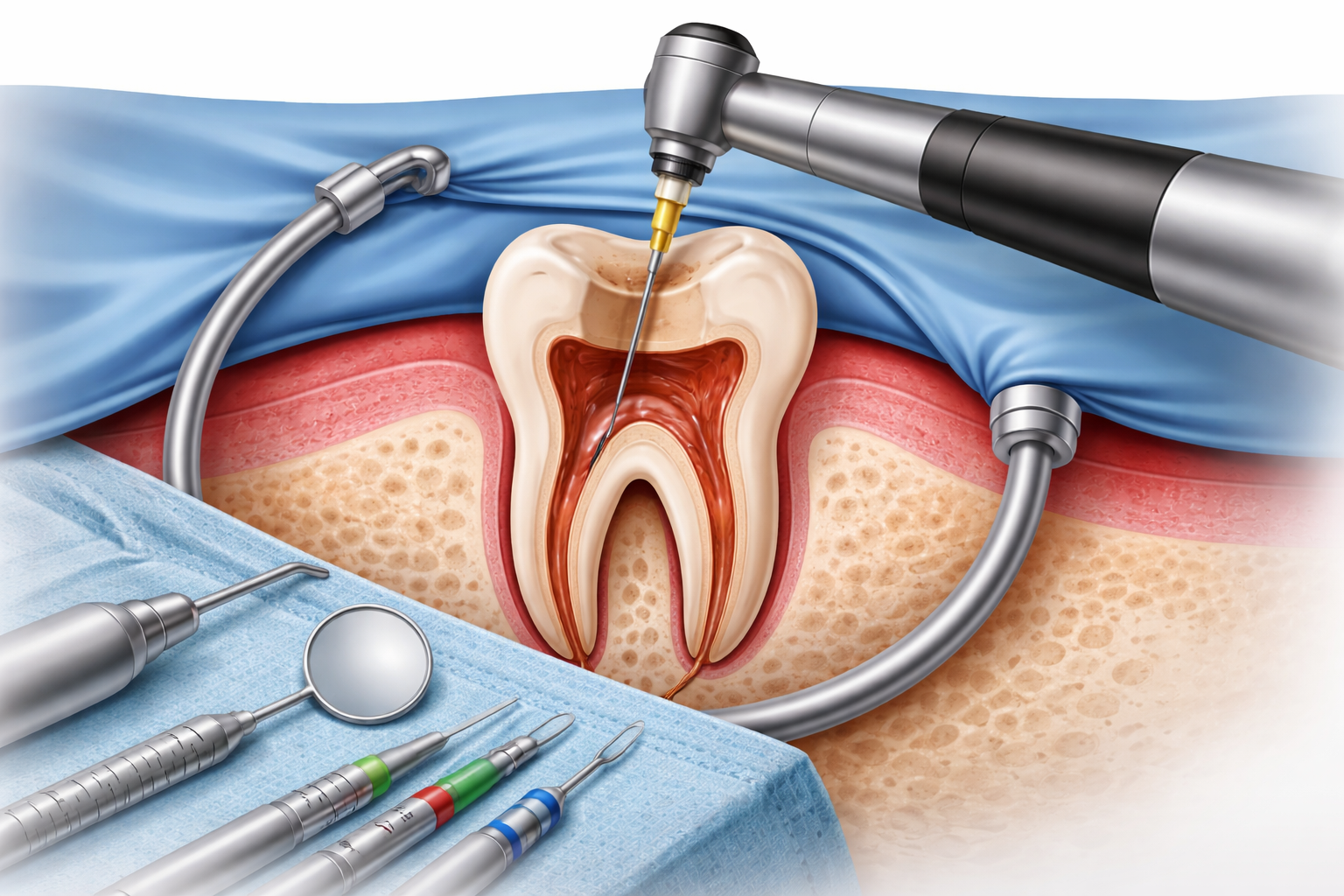
Root canal treatment procedure — the infected or damaged pulp tissue is carefully removed from inside the tooth. The root canals are then cleaned, shaped, and disinfected using specialised instruments. Once thoroughly cleaned, the canals are filled with a biocompatible material and sealed to prevent reinfection. The procedure is carried out under local anaesthetic to ensure you remain comfortable throughout.
Crown placement — after root canal treatment, the tooth is often weakened and a dental crown is placed over it to provide strength, protection, and a natural appearance. This helps the tooth function normally for years to come.
Antibiotics — if there is significant infection or swelling, a course of antibiotics may be prescribed before or alongside the root canal treatment to help control the infection.
Retreatment — in rare cases where a previous root canal treatment has not fully resolved the issue, retreatment can be carried out. This involves reopening the tooth, removing the old filling material, re-cleaning the canals, and resealing them.
Tooth extraction — if the tooth cannot be saved despite treatment efforts, extraction may be recommended as a last resort. We can then discuss replacement options such as dental implants or bridges to restore your smile.
Prevention Tips
Treat cavities early — prompt treatment of tooth decay prevents it from progressing to the pulp and causing infection.
Attend regular dental check-ups so that potential issues can be identified and addressed before they become serious.
Wear a mouthguard during contact sports to protect teeth from trauma that could damage the pulp.
Maintain thorough oral hygiene with twice-daily brushing and daily interdental cleaning.
If you experience any persistent toothache or sensitivity, seek dental advice promptly rather than waiting for it to worsen.
Avoid delaying treatment on cracked or chipped teeth, as these can allow bacteria to access the inner tooth.